December 17, 2007
Adela Ben-Yakar, assistant professor of mechanical engineering at The University of Texas at Austin, has received $2.1 million to discover genes that affect nerve regeneration in a simple organism that shares many genetic traits with humans and other higher organisms.
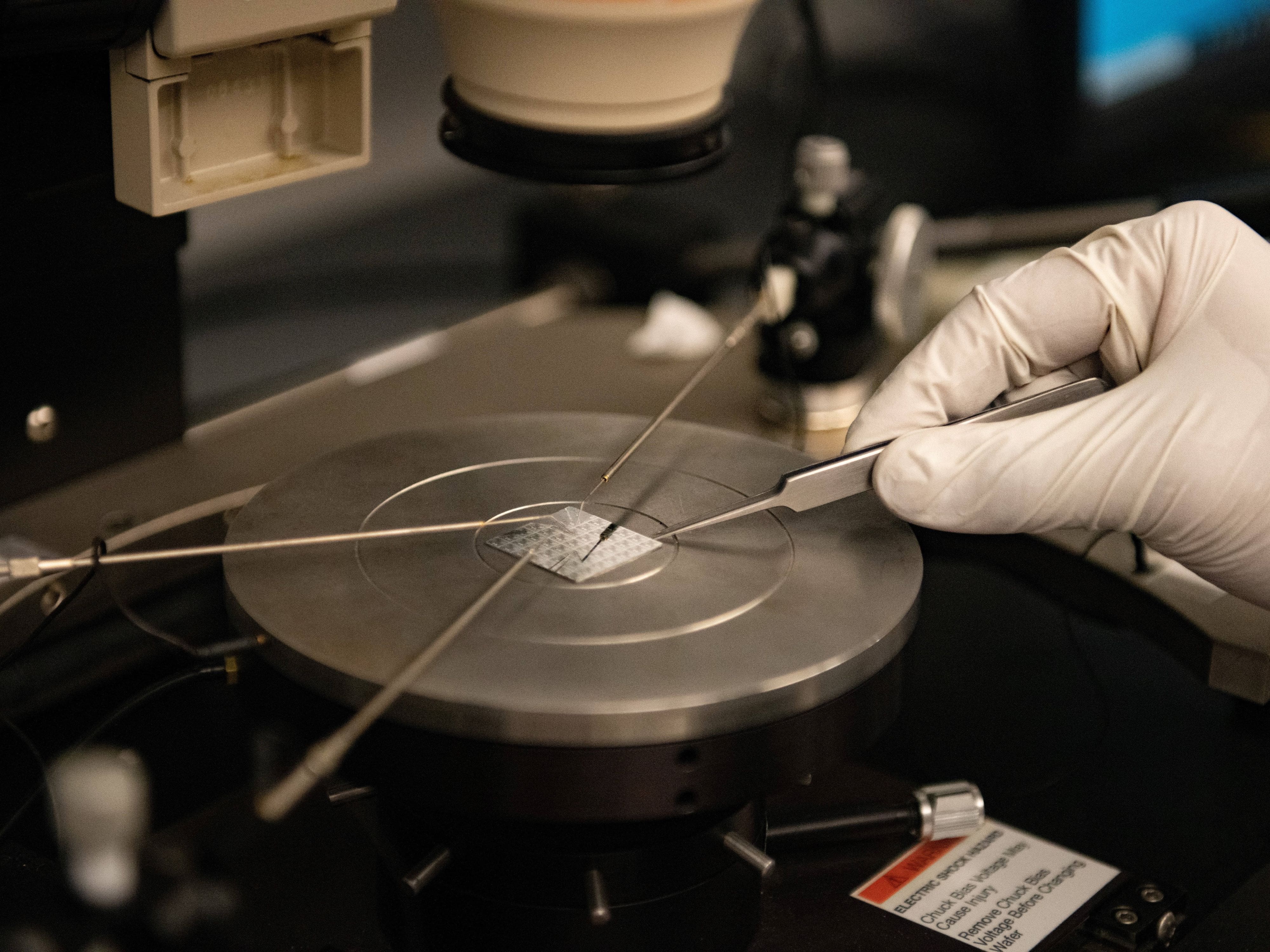
Ben-Yakar previously demonstrated in research published in Nature that ultrashort laser pulses can precisely cut an individual nerve in the roundworm C. elegans. The laser “scalpel” cuts extensions of nerve cells called axons that carry nerve signals to muscles or to other cells.
With one of the two grants recently received from the National Institutes of Health, she will use this femtosecond laser nanosurgery technique to hunt for genes that control nerve regrowth after injury. The ultimate goal of this genetic analysis is to understand general nerve regeneration steps to aid rehabilitative efforts in humans who suffer nerve injuries.
To streamline this analysis, Ben-Yakar received another grant to optimize the process she uses to evaluate nerve regeneration in roundworms. This high-throughput evaluation involves temporarily immobilizing the microscopic roundworms within individual plastic channels using pressurized air. The air bends theupper, thin wall of each channel, forcingthe worm within it to lie still for laser surgery. She then uses fluid to nudge the 1 millimeter-long worms into a recovery chamber where she monitors their nerve regeneration.
Performing many surgeries this way should permit key nerve regeneration genes to be identified faster, while eliminating the need for anesthesia. Anesthesia interferes with normal regeneration processes in the roundworm, and lengthens surgery times.
For photos of Adela Ben-Yakar, go to:
http://www.engr.utexas.edu/news/action_shots/pages/ben-yakar_1_08.cfm
About the Cockrell School of Engineering:
The Cockrell School ranks among the top ten engineering programs in the United States and aspires to move into the top five. With the nation's fourth highest number of faculty members elected to the National Academy of Engineering, the Cockrell School's more than 7,000 students work with many of the world's finest engineering educators and researchers. This environment prepares graduates to become engineering leaders and innovators working for the betterment of society.