By Joseph Winters, Institute of Physics
July 24, 2008
Converting livestock manure into a domestic renewable fuel source could generate enough electricity to meet up to 3 percent of North America's entire consumption needs and lead to a significant reduction in greenhouse gas emissions, according to U.S. research published July 24, in the Institute of Physics' Environmental Research Letters.
The journal paper, 'Cow Power: The Energy and Emissions Benefits of Converting Manure to Biogas', has implications for all countries with livestock as it is the first attempt to outline a procedure for quantifying the national amount of renewable energy that herds of cattle and other livestock can generate and the concomitant greenhouse gas emission reductions.
Livestock manure, left to decompose naturally, emits two particularly potent greenhouse gases– nitrous oxide and methane. According to the Intergovernmental Panel on Climate Change, nitrous oxide warms the atmosphere 310 times more than carbon dioxide, methane does so 21 times more.
The journal paper creates two hypothetical scenarios and quantifies them to compare energy savings and greenhouse gas reducing benefits. The first is 'business as usual' with coal burnt for energy and with manure left to decompose naturally. The second is one wherein manure is anaerobically-digested to create biogas and then burnt to offset coal.
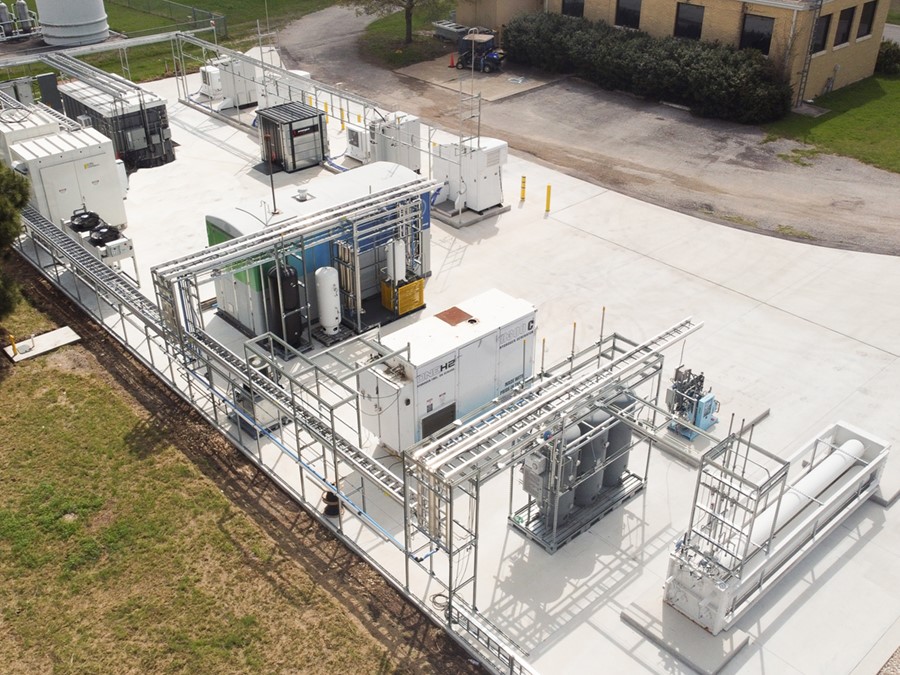
Through anaerobic digestion, similar to the process by which you create compost, manure can be turned into energy-rich biogas, which standard microturbines can use to produce electricity. The hundreds of millions of livestock inhabiting the United States could produce approximately 100 billion kilowatt hours of electricity, enough to power millions of homes and offices.
And, as manure left to decompose naturally has a very damaging effect on the environment, this new waste management system has a net potential greenhouse gas emissions reduction of 99 million metric tonnes, wiping out approximately 4 percent of the country's greenhouse gas emissions from electricity production.
The burning of biogas would lead to the emission of some CO2 but the output from biogas-burning plants would be less than that from, for example, coal.
Authors of the paper, Dr. Michael E. Webber, assistant professor of mechanical engineering, and Amanda D Cuellar, a student in chemical engineering from the University of Texas at Austin, write, "In light of the criticism that has been levelled against biofuels, biogas production from manure has the less-controversial benefit of reusing an existing waste source and has the potential to improve the environment.
"Nonetheless, the logistics of widespread biogas production, including feedstock and digestates transportation, must be determined at the local level to produce the most environmentally advantageous, economical, and energy efficient system."
About the Cockrell School of Engineering:
The Cockrell School ranks among the top ten engineering programs in the United States and aspires to move into the top five. With the nation's fourth highest number of faculty members elected to the National Academy of Engineering, the Cockrell School's more than 7,000 students work with many of the world's finest engineering educators and researchers. This environment prepares graduates to become engineering leaders and innovators work¬ing for the betterment of society.